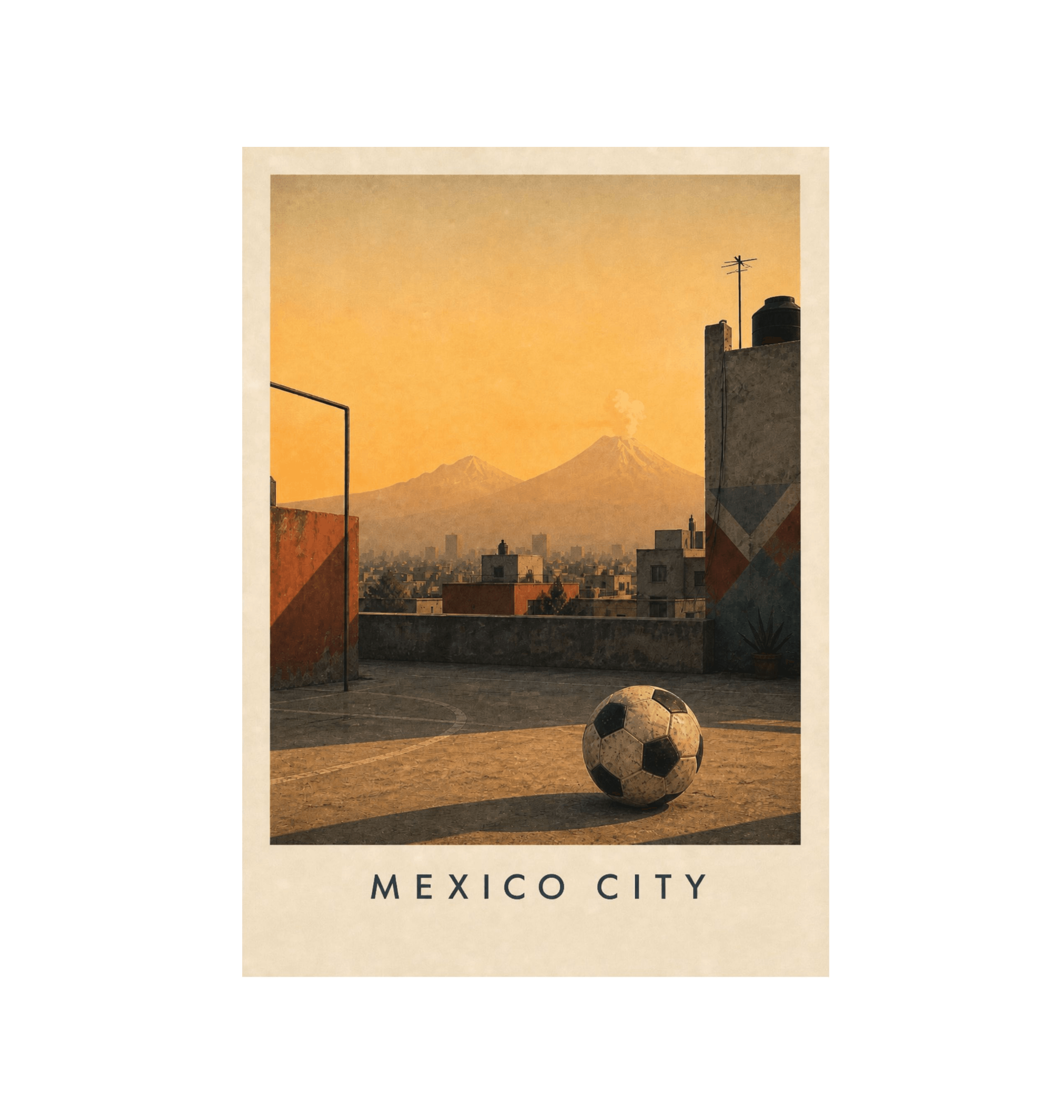
Cathedrals of Football
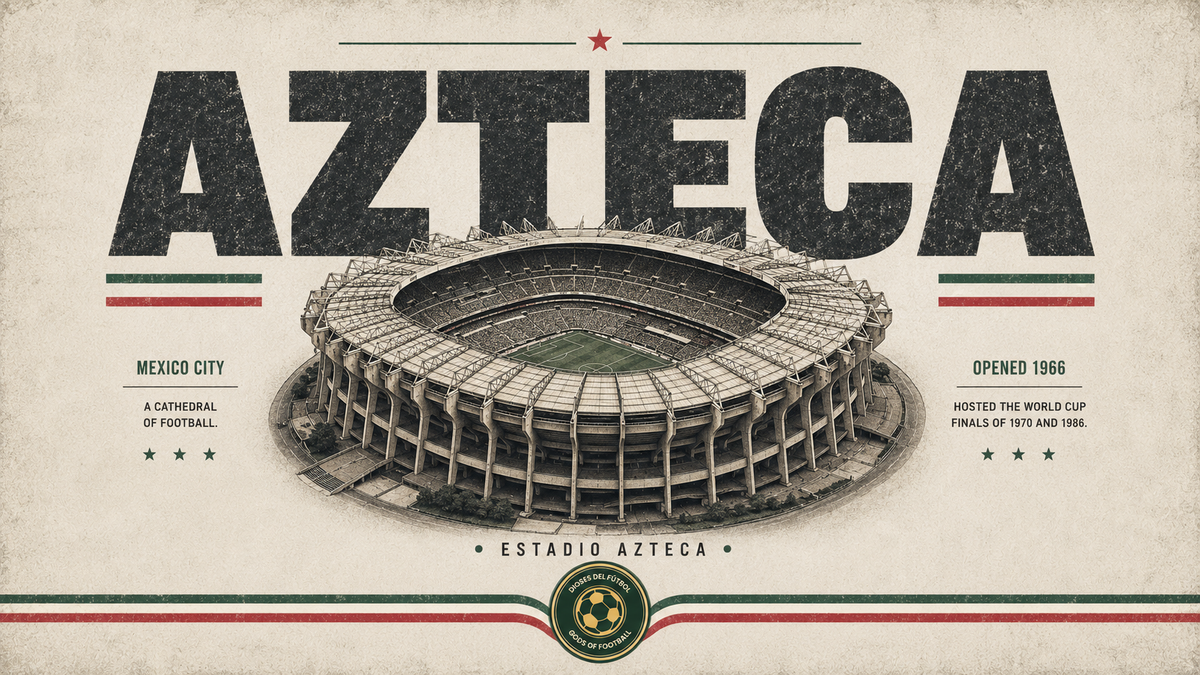
If Wembley is the home of football, the Azteca is where the game goes to pray.
Tomorrow afternoon, at an altitude where the air starts negotiating with your lungs, Mexico kick off against South Africa and the World Cup begins. It begins, as it should, at the Estadio Azteca. No other ground on earth has opened a World Cup twice. Tomorrow it does so for a third time, which is a record nobody else will ever touch, because nobody else is the Azteca.
English football likes to call Wembley the home of the game, and fair enough. We invented it, we codified it, we gave the world the offside trap and the half time pie. But homes are where you live. Cathedrals are where things happen that you spend the rest of your life trying to explain. The Azteca is the cathedral.
It rose out of volcanic rock in the south of Mexico City in 1966, a vast concrete bowl designed by Pedro Ramirez Vazquez, built steep and built mean, with the stands climbing almost vertically so that a hundred thousand people seem to hang directly over the pitch. Add the altitude, over two thousand metres of it, and the heat, and the noise, and you have a ground that doesn't host football matches so much as preside over them.
Four years after opening, it staged the tournament that people still argue is the best ever played. The 1970 World Cup gave the Azteca its first two miracles in the space of four days. On 17 June, Italy and West Germany played a semi final that finished 4-3 to the Italians after extra time, five of the seven goals arriving in that breathless added half hour. Franz Beckenbauer dislocated his shoulder, and with both German substitutions used, played on with his arm strapped across his chest like a man late for his own funeral. They call it the Game of the Century. There's a plaque at the Azteca that says so, and for once the marketing is underselling it.
Then, on 21 June, in front of 107,412 people, came the final. Brazil 4-1 Italy. Pele opened the scoring with a header. Carlos Alberto closed it with the goal, the one that starts with Tostao deep in his own half and ends with the captain arriving at full gallop to bury Pele's lazy, perfect lay off into the corner. Eight Brazilians touched the ball in that move. The first World Cup broadcast in colour around the planet, and Brazil chose that moment to show everyone exactly what the colours were for. The crowd poured on at full time and stripped Pele down to his underpants for souvenirs. The Jules Rimet trophy went to Brazil for keeps. Some of Pele's kit presumably went to Coyoacan.
Sixteen years later, the cathedral hosted its darker mass. On 22 June 1986, before 114,580 people, Argentina met England in a quarter final played four years after the Falklands, a fixture so loaded that Argentina's federation had protested the draw. In the space of four second half minutes, Diego Maradona scored the most infamous goal in the history of the sport and then the greatest one. The first with his fist, undetected by a Tunisian referee with the worst sightline in Mexico. The second with a sixty metre slalom past half of Bobby Robson's England that FIFA's own voters would later crown the Goal of the Century. Argentina won 2-1. England went home with a grievance they're still nursing forty years on, and the Azteca added a chapter no scriptwriter would dare submit.
A week later Maradona lifted the trophy in the same ground after Argentina beat West Germany 3-2 in a final that swung like a saloon door. Two World Cups, two finals, two of the defining players of the twentieth century crowned on the same patch of grass. Pele in 1970, Maradona in 1986. No other stadium has hosted two World Cup finals and produced a coronation in both. The Azteca hasn't just witnessed more World Cup matches than any ground in the world. It's hoarded the best ones.
Which brings us to now, and to the bit the suits couldn't resist. The old place has spent the last two years under the knife, a renovation costing north of a hundred and fifty million pounds, funded in part by a loan from a Mexican bank called Banorte. The price of the money was the name. Since March of last year the cathedral has officially been called Estadio Banorte, a decision opposed, according to polling reported by ESPN, by roughly eighty five per cent of the Mexican public. The last time anyone tried renaming it, in 1997, the backlash killed the idea within months. This time the mortgage is bigger.
There is one small mercy. FIFA's sponsorship rules forbid rival branding at the tournament, so for the next five weeks the ground will be officially listed as Estadio Ciudad de Mexico. Which means the most storied football venue on the planet opens its third World Cup under a name that belongs to nobody, having sold the one that belonged to everybody. Modern football, ladies and gentlemen.
But here's the thing about cathedrals. The signage is the least important part of the building. Tomorrow, when Mexico walk out in front of a rebuilt, repainted, resold Azteca, the ghosts will be exactly where they've always been. Beckenbauer's sling. Carlos Alberto's thunderbolt. The fist, the slalom, the boy from Villa Fiorito ascending in front of 114,580 witnesses.
The Azteca hosts five total matches during the World Cup: three group stage fixtures and two knockout stage ties.
Call it whatever you like. The Azteca has already heard every name that matters.
Dios del Fútbol is part of the Headers and Volleys Fanzine Network.
 Mexico City Football Print