Andrés Escobar: The Gentleman of Medellín, USA 94
Colombia went to the 1994 World Cup as Pelé's favourites. Then came an own goal and the murder of Andrés Escobar. Football's most haunting summer.
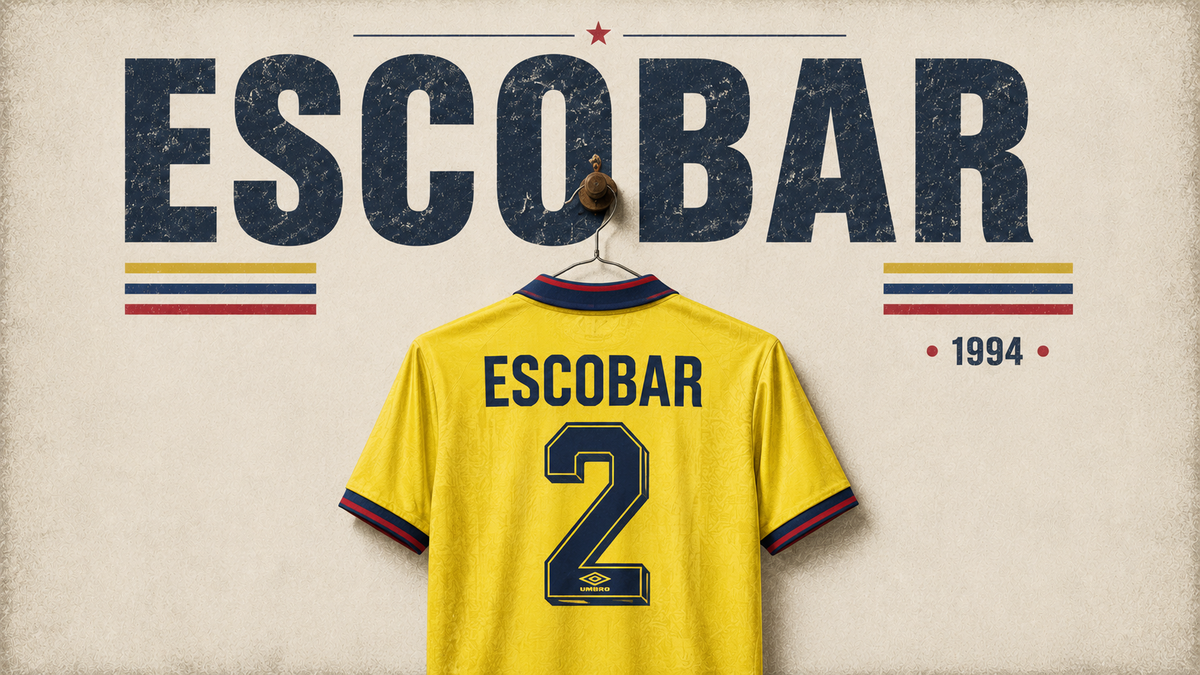
Pelé picked them to win the 1994 World Cup. Ten days after one deflected cross, Andrés Escobar was dead.
They arrived at the 1994 World Cup as the side the rest of the planet had been warned about. Pelé, who rarely gave his blessing lightly, had named them among his favourites to win the whole thing, and the football justified him. In the qualifiers they had walked into the Estadio Monumental in Buenos Aires and handed Argentina the heaviest home defeat in their history, 5-0.
Maradona, who had spent the build up insisting his country belonged above Colombia, watched from the stands and was reduced to applauding, and the home crowd gave the Colombians a standing ovation as they left the pitch.
In twenty six matches before the tournament Colombia had lost only once. This was a team that passed the ball as though it were a rumour, quick and sly and impossible to follow, with Carlos Valderrama and his great halo of blonde curls conducting from the centre and Faustino Asprilla running in behind. They played like a carnival that happened to keep possession.
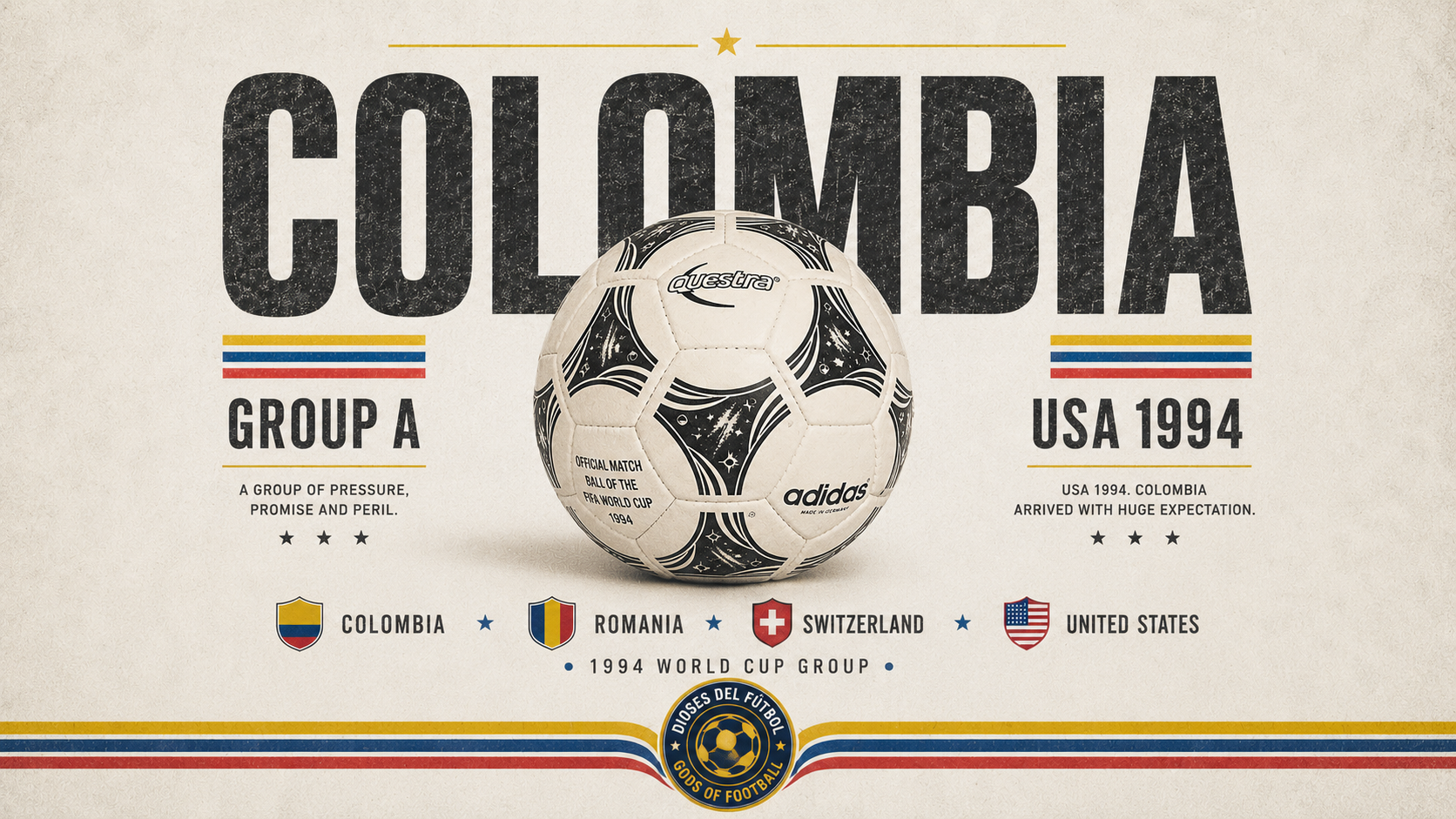
What the world saw was the carnival. What Colombia knew was the cost of it.
Football in Colombia in the early 1990s did not belong to the fans.
It belonged, in large part, to the men who had turned the country into the murder capital of the world. Cocaine money ran through the great clubs, through Atlético Nacional in Medellín and through América de Cali, and the national side that danced so beautifully was built on players those clubs owned.
In December 1993 the most famous of those men, Pablo Escobar, was shot dead on a rooftop in Medellín. His death did not bring peace. It scattered the power he had hoarded and left a dozen smaller men fighting over the pieces, and a country already soaked in blood bled harder. Into all of this walked a handful of footballers carrying the hopes of a nation that desperately needed something to believe in.
They could not carry it.
The first game, against Romania, ended 3-1 and the doubt began at once. Then came the threats. As the squad waited in their hotel in Fullerton, California, ahead of the second match against the host United States, a message reached the coach Francisco Maturana.
If he picked the midfielder Gabriel Gómez, the one everybody called Barrabás, bombs would be set off against their families back in Medellín. Gómez was the brother of Maturana's own assistant coach. Sports Illustrated, reporting that July, set the threat down plainly and noted that it was taken at its word.
Maturana considered resigning. In the end, shaking, he left Gómez out. Asprilla later said the players walked out in Pasadena thinking not about the match but about what losing it might cost them. You can see it in the footage. A team that had played like a rumour now played like men listening for footsteps.
Just past the half hour John Harkes swung a low cross into the Colombian box. Andrés Escobar, the centre back, stretched out a leg to cut it out, the way he had a thousand times, and turned it past his own goalkeeper Óscar Córdoba and into the net. The United States won 2-1. Colombia were out, the favourites gone in the group stage, and the most graceful team in the world flew home in silence.
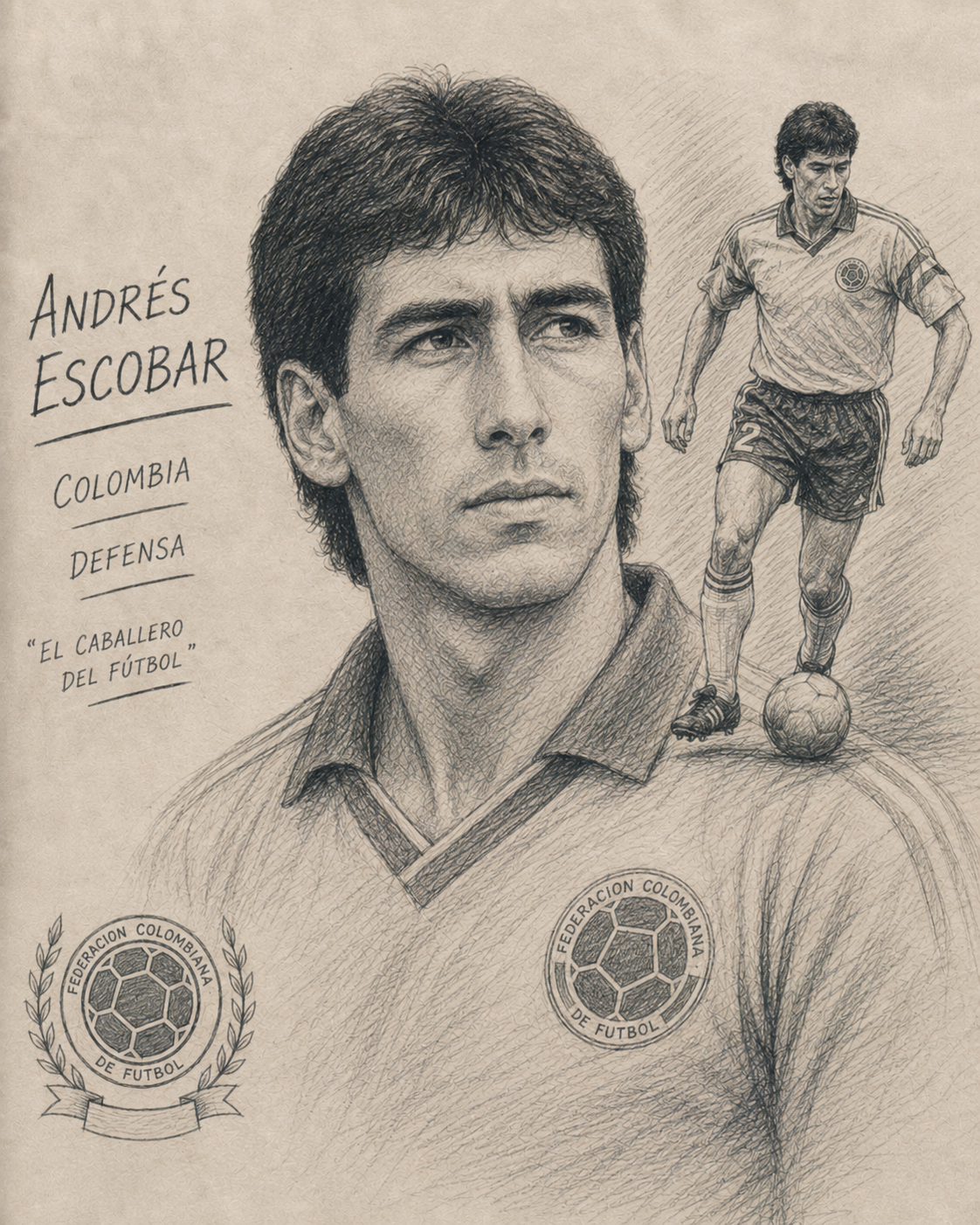
Andrés Escobar was the last man who should have carried that weight.
They called him El Caballero, the gentleman, and everyone who knew him reached for the same words. Quiet. Thoughtful. Decent. He was twenty seven, the heart of the Atlético Nacional defence, soon to be married. He had once told a reporter that this was exactly why he loved the game, that football, unlike the bullfight, contained no death. In football, he said, nobody dies.
After the elimination he wrote a column in the newspaper El Tiempo, not bitter, only gentle, asking his countrymen to keep their heads and their respect. He thanked them for the experience of his life. He signed off with five words Colombia has never been able to read the same way since. Life doesn't end here.
He was warned to stay away. The team had been offered the chance to remain in the United States until the anger at home cooled. Escobar refused. In Medellín, he said, everybody loves us.
The Tragic Death of Andrés Escobar
He went out with friends in the El Poblado district of the city. In the early hours of the second of July 1994, outside a nightclub, he was confronted by a group of men who taunted him about the own goal. He answered them. He asked, by every account, only for respect.
In the car park a bodyguard working for two local drug traffickers drew a pistol and shot him six times. Witnesses said the gunman shouted the word gol with each shot, mocking the commentary of the goal that had killed him, though whether that is fact or the kind of detail grief invents has never been certain. Andrés Escobar died in hospital that morning. He was twenty seven years old.
The killing is still widely believed to be a reprisal from gangsters who had sustained heavy losses betting on Colombia at the World Cup. Escobar had been targeted in the bar by the Gallón Henao brothers, two notorious drug and gambling barons. However it was their driver on the night of the shooting, Humberto Muñoz Castro, who was pointed out as the legal killer. He received a 43-year sentence and was released after 11 years. (source).
What followed was not the silence of a single death but the grief of a whole country recognising itself in it.
The funeral filled the streets of Medellín.
For years afterwards the best Colombian players left, the league rotted, and the golden generation became a thing people spoke of in the past tense and lowered their voices to name. In time a statue of Escobar went up in Medellín, and every year the anniversary of his death is still marked at grounds across the country. He had wanted football to teach people how to live. Instead his death taught a nation what it had allowed itself to become.
It took Colombia a long time to be allowed to dream again.
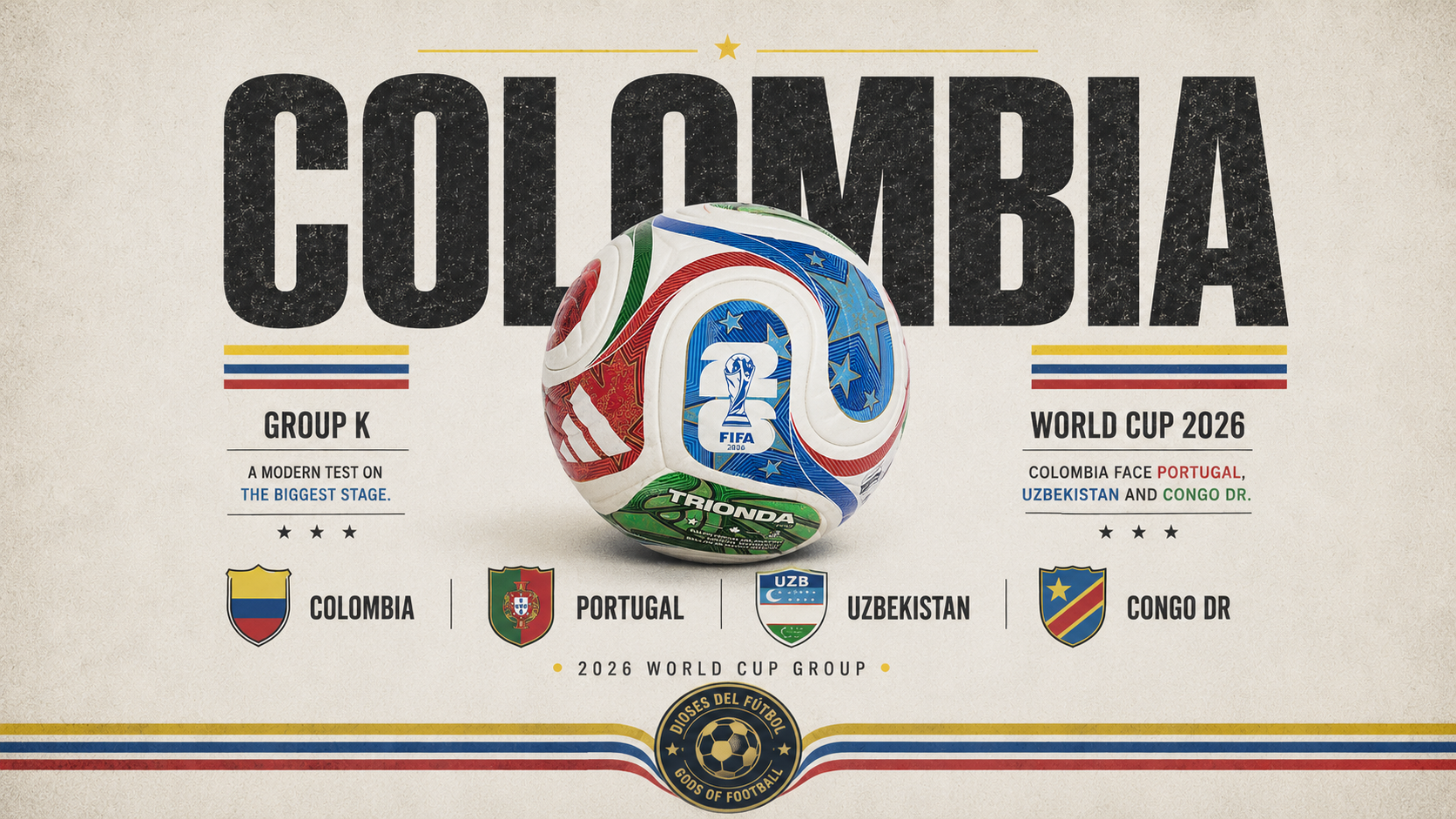
This summer Colombia are back. Thirty two years after their golden team flew home in pieces, Colombia have qualified for the 2026 World Cup. They go again as dark horses, James Rodríguez carrying the armband into what will surely be his last tournament, with Luis Díaz carrying the threat. A new generation in the same yellow shirt, on the same continent, chasing the thing the gentleman and his friends were promised and never reached.
They will run out to drums and flags and that enormous, fragile Colombian hope. Somewhere in it, as there always is, will be a ghost in a number two shirt, stretching out a leg, asking only for respect.
Dios del Fútbol is part of the Headers and Volleys Fanzine Network.